Sometimes the first sign that something isn't right at school doesn't happen in the classroom.
It happens at home.
It's the tears on Sunday evening. The tummy ache before school. The meltdown over something that would normally be manageable.
Perhaps school tells you your child is doing fine, but you're seeing a completely different picture.
You don't need to have all the answers to start asking questions.
10 signs worth paying attention to
Every child has difficult days. But if you notice these behaviours becoming more frequent, more intense or affecting everyday life, it may be time to look a little closer.
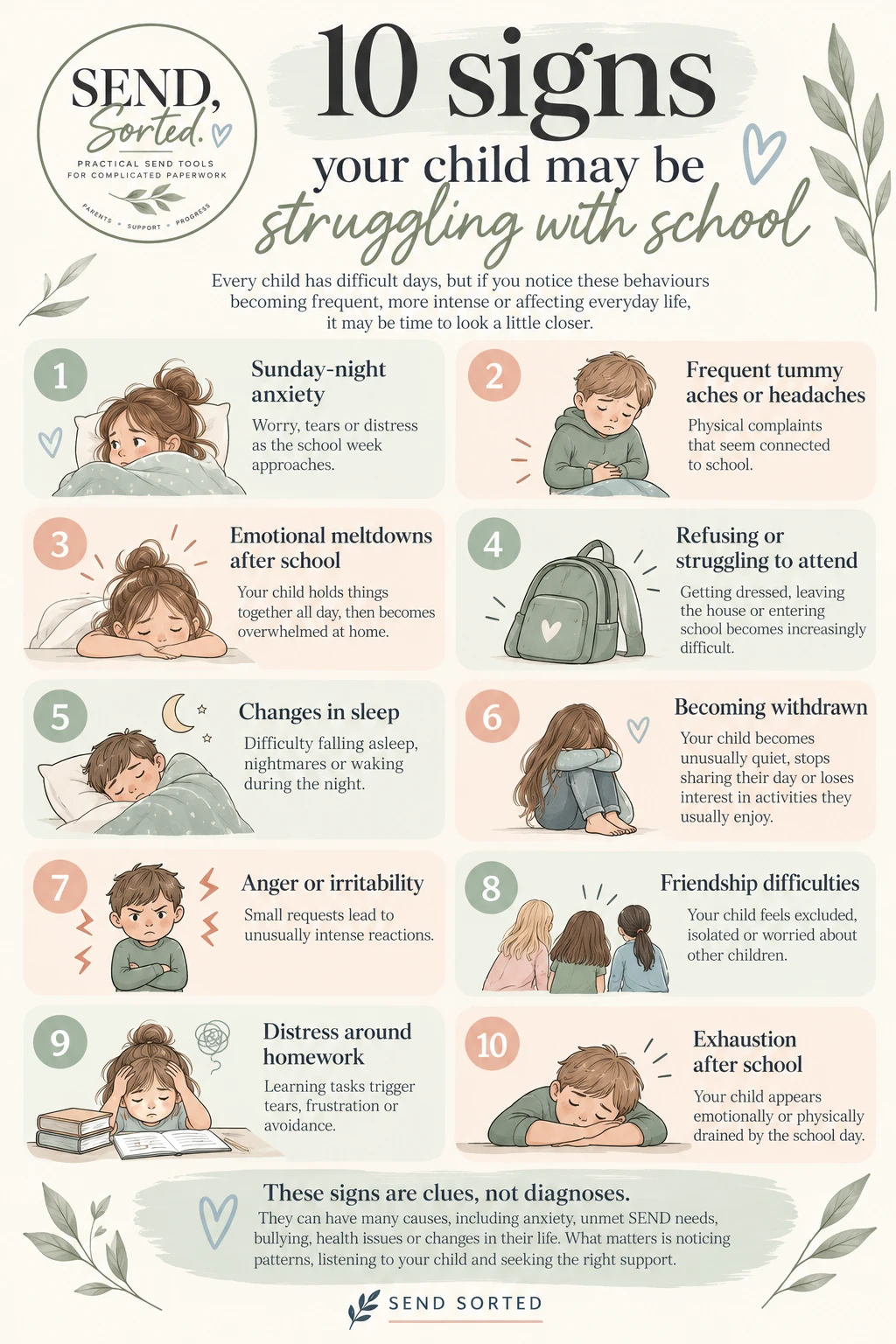
1. Sunday-night anxiety
Your child becomes worried, tearful or distressed as the school week approaches. They may repeatedly ask about Monday morning or struggle to settle at bedtime.
2. Frequent tummy aches or headaches
Physical complaints seem particularly common on school mornings. These symptoms can be genuine manifestations of anxiety, but persistent or concerning symptoms should also be discussed with a healthcare professional.
3. Emotional meltdowns after school
Your child appears to manage during the school day but becomes overwhelmed once they're home. They may have been working hard to cope with demands throughout the day.
4. Refusing or struggling to attend
Getting dressed, leaving the house or entering school becomes increasingly difficult. Your child may want to attend but feel unable to manage it.
5. Changes in sleep
Difficulty falling asleep, nightmares or waking during the night become more common, particularly before school days.
6. Becoming withdrawn
Your child becomes unusually quiet, stops talking about their day or loses interest in activities they previously enjoyed.
7. Anger or irritability
Small requests lead to unusually intense emotional reactions. Your child may appear frustrated, overwhelmed or less able to manage everyday demands.
8. Friendship difficulties
Your child feels excluded, isolated or worried about other children. They may become anxious about breaktimes, lunchtimes or particular social situations.
9. Distress around homework
Homework or learning activities trigger tears, frustration or avoidance. Your child may be struggling with the work, experiencing exhaustion or feeling anxious about making mistakes.
10. Exhaustion after school
Your child appears emotionally or physically drained at the end of the school day and needs significant time to recover.
Remember: These signs are clues, not diagnoses.
They can have many causes, including anxiety, unmet special educational needs, bullying, health difficulties or changes in your child's life.
What matters is recognising patterns, listening to your child and seeking appropriate support.
First step: Start noticing patterns
Before trying to work out what support your child might need, it can help to keep a simple record.
Ask yourself:
- Does the difficulty happen on particular days?
- Are certain lessons, teachers or situations mentioned?
- Is your child happier during weekends and school holidays?
- What happens before and after school?
- What helps your child feel calmer or more secure?
Even a few minutes of recording each day can help you recognise patterns and explain your concerns more clearly.
FREE PRINTABLE
FREE EBSA & Attendance Tracker
Noticing changes in your child's attitude towards school? Start recording attendance, worries, possible triggers and patterns with our free printable tracker.
Download Your Free TrackerNo signup. No payment. Just a practical resource to help you get started.
What could be happening?
There isn't always one simple explanation for a child struggling with school.
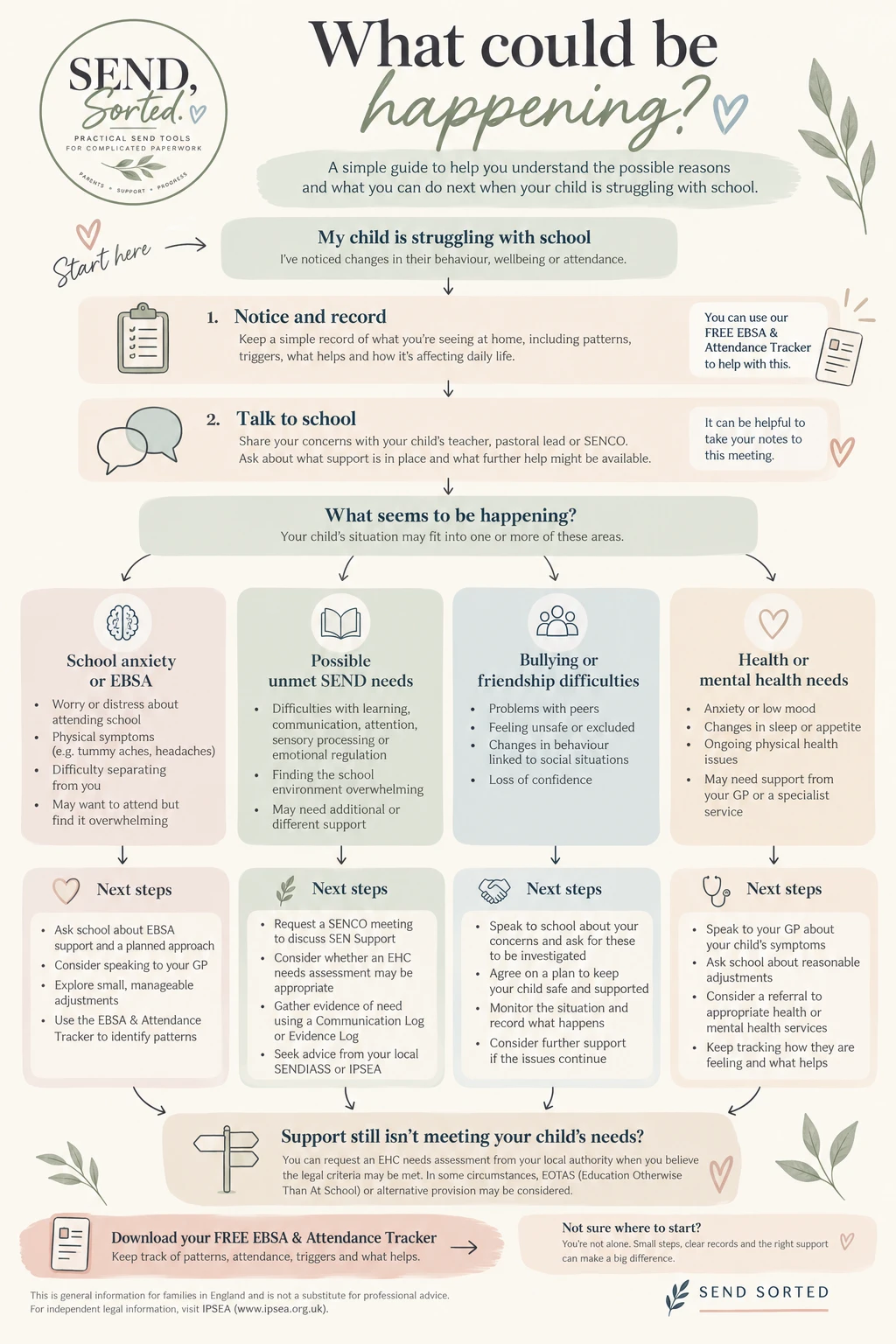
School anxiety or EBSA
Emotionally Based School Avoidance (EBSA) describes difficulties attending school associated with emotional distress.
Your child may want to attend but find the experience overwhelming.
Support might include understanding triggers, working with school on an individual plan and making manageable adjustments.
Possible unmet special educational needs
Some children experience difficulties with learning, communication, attention, sensory processing or emotional regulation.
They may need additional support or adjustments at school.
You can ask to meet the school's Special Educational Needs Coordinator (SENCO) to discuss SEN Support and whether further assessment may be appropriate.
Bullying or friendship difficulties
Feeling unsafe, excluded or isolated can make school extremely distressing.
Raise concerns with school, ask how they will investigate and agree what action will be taken to keep your child safe and supported.
Health or mental health difficulties
Physical illness, anxiety and other health conditions can affect a child's wellbeing and ability to attend school.
Speak to your GP about persistent or concerning symptoms and ask school what reasonable adjustments or support may be appropriate.
More than one of these factors may be involved.
What should I do next?
Step 1: Listen to your child
Choose a calm moment and ask open questions. Try to understand what feels difficult without assuming the answer.
Step 2: Record your concerns
Use the free EBSA & Attendance Tracker to record patterns, your child's own words and anything that helps.
Step 3: Speak to school
Ask for a meeting with your child's teacher, pastoral lead or SENCO.
Explain what you're seeing at home, even if school hasn't noticed the same difficulties.
Step 4: Ask what support can be put in place
Depending on your child's needs, support might include a trusted adult, quieter spaces, adjustments to learning, friendship support or SEN Support.
Ask school to agree a plan and a date to review how it's working.
Step 5: Explore further help if needed
Depending on your child's circumstances, you might consider speaking to your GP, contacting your local SEND Information, Advice and Support Service (SENDIASS), requesting an EHC needs assessment or asking for a review of an existing EHCP.
Parents can request an EHC needs assessment directly from their local authority when they believe the legal criteria may be met. A diagnosis is not required before making a request.
Understanding your options
The SEND system can feel complicated, especially when you're just beginning to look for help.
Here's what some common terms mean.
- SEN Support
- Additional or different educational support provided by a school for a child with special educational needs.
- EBSA Support
- An approach to understanding and addressing the emotional distress that makes attending school difficult.
- EHC Needs Assessment
- A formal assessment by the local authority to determine a child's education, health and care needs and whether an Education, Health and Care Plan may be necessary.
- EHCP
- An Education, Health and Care Plan is a legal document identifying a child's needs and the provision required to meet them.
- EOTAS
- Education Otherwise Than At School is a legal arrangement that may be appropriate in certain circumstances when education in a school would be inappropriate for a child or young person.
These are not necessarily stages that every child must work through in order. The appropriate support depends on individual circumstances.
EOTAS is not an automatic consequence of school avoidance.
For independent information, see IPSEA's guidance on requesting an EHC needs assessment and GOV.UK's guide to SEND support and EHC plans.
Keep reading
- My Child Is Struggling at School — Where Do I Even Start?
- How to Apply for an EHCP
- EHCP Application Evidence: What Should I Include?
- What is EOTAS?
You don't have to work everything out today
If your child is struggling, the most useful first step may simply be to listen, notice patterns and begin a conversation.
At SEND Sorted, our aim is to make complicated SEND information easier to understand and give parents practical tools to help them take the next step.
Start with our FREE EBSA & Attendance Tracker.
No signup, no jargon and no pressure.
Need more practical tools?
Explore our printable resources for communicating with school, recording evidence and navigating SEND processes.
- Preparing to contact school? Explore the Communication Log.
- Building evidence? Explore the SEND Evidence Log.
- Researching EOTAS? Explore the EOTAS Package Planner.
SEND Sorted provides general information for families in England and does not replace individual legal, educational or medical advice. For independent SEND legal information, visit www.ipsea.org.uk. If you're concerned about your child's health or wellbeing, speak to a healthcare professional.